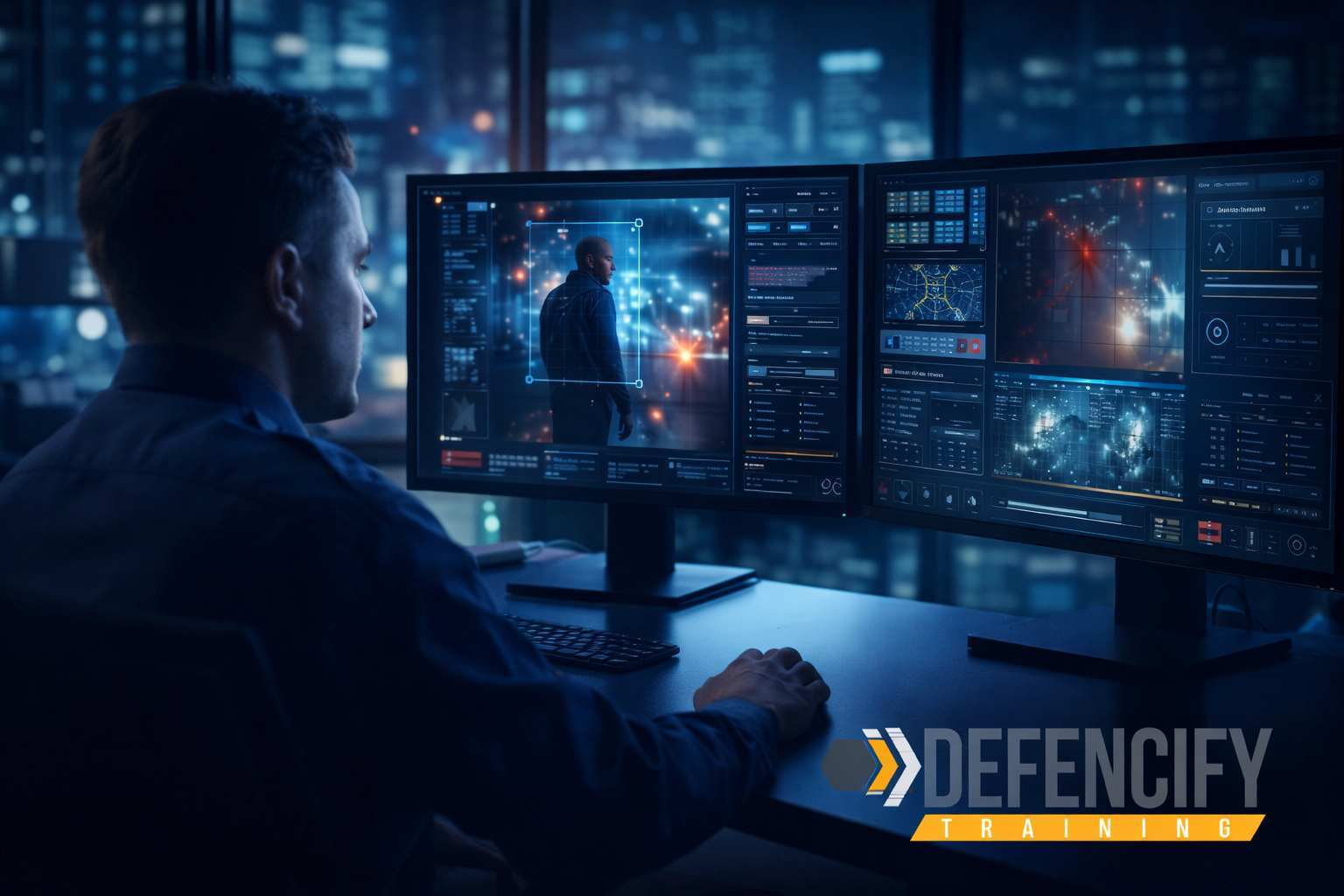
AI-powered surveillance tools like cameras, license plate readers, and behavior-detection systems are rapidly penetrating the security landscape. However, these tools are imperfect, as recent events have shown, highlighting how AI errors can lead to wrongful arrests and accusations.
The challenges are indisputable, as a single poor judgment call can result in unnecessary harm to the public and in legal and ethical concerns for security guards, employers, and clients.
Training must focus not just on how to use the equipment and software, but also on the need for human oversight. Technology is only as effective as those who wield it, and failure to recognize machine errors could result in personal injury, data privacy breaches, loss of trust, and reputational damage for the firm.
AI cannot establish intent, and its margin of error in areas such as weapons detection, facial recognition, and behavioral analysis remains imperfect. Officers working with the technology must understand where the AI can help and where it requires human oversight, as these decisions can shape the quality (and legality) of the outcome.
The Many Benefits of AI Surveillance
Artificial intelligence has the power to make a guard’s job much more efficient. Drones and robots can help patrol vast areas, extending coverage without added expense or risk.
AI systems can process massive amounts of data in seconds, quickly identifying threats and security risks in real time. With this critical support, guards experience fewer false alarms and can respond appropriately to events requiring further investigation.
Predictive analysis AI can help to prevent crime before it happens and support more effective allocation of resources.
Enhanced AI cameras are exceptionally good at identifying unattended bags or suspicious individuals, alerting security personnel to follow up.
License plate recognition software supports automated parking, flags unusual vehicle movements, and can track vehicles in restricted areas. In many cases, it can also identify the vehicle’s color, make, and model, a very useful tool when trying to identify a perpetrator.
The dark side of AI surveillance: ethical concerns
Despite AI’s potential and the many ways it has improved security, there are significant ethical concerns about public privacy and safety. While some results are reliable, there is a wide margin for error, increasing public risk and liability.
So, what could go wrong? Here are a few examples.
·
The use of AI surveillance in public places, such as facial recognition cameras, may infringe on an individual’s right to privacy.
·
How the data collected from the AI is used also plays a role, as it can be sold to third parties or used for advertising without the person’s consent.
·
AI systems can be prone to algorithmic bias stemming from the data they were trained on, leading to unfair interpretations of results. For example, facial recognition has a higher incidence of error for people of color, which has led to many unfortunate (and injurious) situations.
·
Historical crime data used to train models can reinforce bias, leading to inappropriate responses and an unbalanced allocation of police resources.
·
Relying too heavily on AI results eliminates the presumption of innocence.
Without full accountability and transparency, the public may be challenged to contest erroneous results, and civil liberties are eroded. All the above examples underscore the importance of human oversight, which should be baked into the training process.
As guards are increasingly tasked with learning modern AI tools, training needs go beyond simply knowing how to use and interpret the software. They must also understand the limitations of these tools and the importance of their role in ensuring not just the technology’s effectiveness but also its safety.
Ultimately, AI surveillance technology is meant to assist, not replace, what guards do. Guards still need to apply their training and judgment to inform their actions, rather than unquestioningly accept every result the software delivers.
Training Tips for Guards Using AI Surveillance and Automated Security
There are few guard posts today that do not require a certain level of comfort with technology. The more effectively and confidently they can use it, the higher their value to a client and their firm.
Here are a few essential tips to include in any modern security tech training program.
Understand what could go wrong. No matter how accurate a system claims to be, there is always a margin for error. AI security systems often lack transparency into their training models, so caution is always required.
·
Verify AI alerts before acting. Recently, a campus AI system mistook a bag of chips for a gun and automatically alerted law enforcement, resulting in an unnecessary shakedown at gunpoint. This is not an isolated incident, but it could have been avoided with human oversight. When generating an alert, the program did what it was supposed to do, but the school principal took the alert as gospel and pushed for a police presence. Understandably, the boy was shaken, as were his parents. It could have ended very badly.
In another scenario, imagine a surveillance robot recognizing anomalous behavior. The machine lacks context and cannot accurately distinguish between benign and more sinister behavior. A human could provide that context and respond appropriately.
·
Avoid overreliance on automated systems. AI is imperfect; we’ve established this. Systems sometimes fail, emphasizing the need for diligence. Cameras cannot intervene and do not provide the same deterrent effect as a physical guard presence.
·
Beware of alert fatigue. In other cases, AI can deliver excessive false positives, leading guards to pay less attention to data coming through the system. Desensitization can cause guards to miss critical alerts and could put property and the public at risk.
·
Understand privacy and legal concerns. Guards should understand the ethical and legal risks of automated AI.
o
Loss of autonomy and civil liberties violations due to constant or unlawful monitoring
o
Data privacy breaches stemming from a lack of informed consent
o
Algorithmic bias causing false flags for minorities and women
o
Unauthorized third-party data use (such as for marketing purposes)
o
Unlawful use cases (facial recognition in schools is illegal)
o
Liability stemming from AI system failure or harm caused by incorrect identification
o
Regulatory inconsistency between local, state, and federal jurisdictions
Tech training programs should not focus solely on how to use automated software; they should also outline its limitations and emphasize the legal and ethical aspects of its use.
Guards who are well-versed in these matters will be better able to protect themselves, their firms, and the public from tech-induced liability and to maximize the benefits of clients’ investments.
Tech is Another Tool in a Guard’s Arsenal. Use it Wisely.
When incorporating AI automation training into the guard experience, it is critical to include the ethical angle. As the technology advances, we expect it to become more accurate, but it will never replace what a guard does.
Browse our courses today.