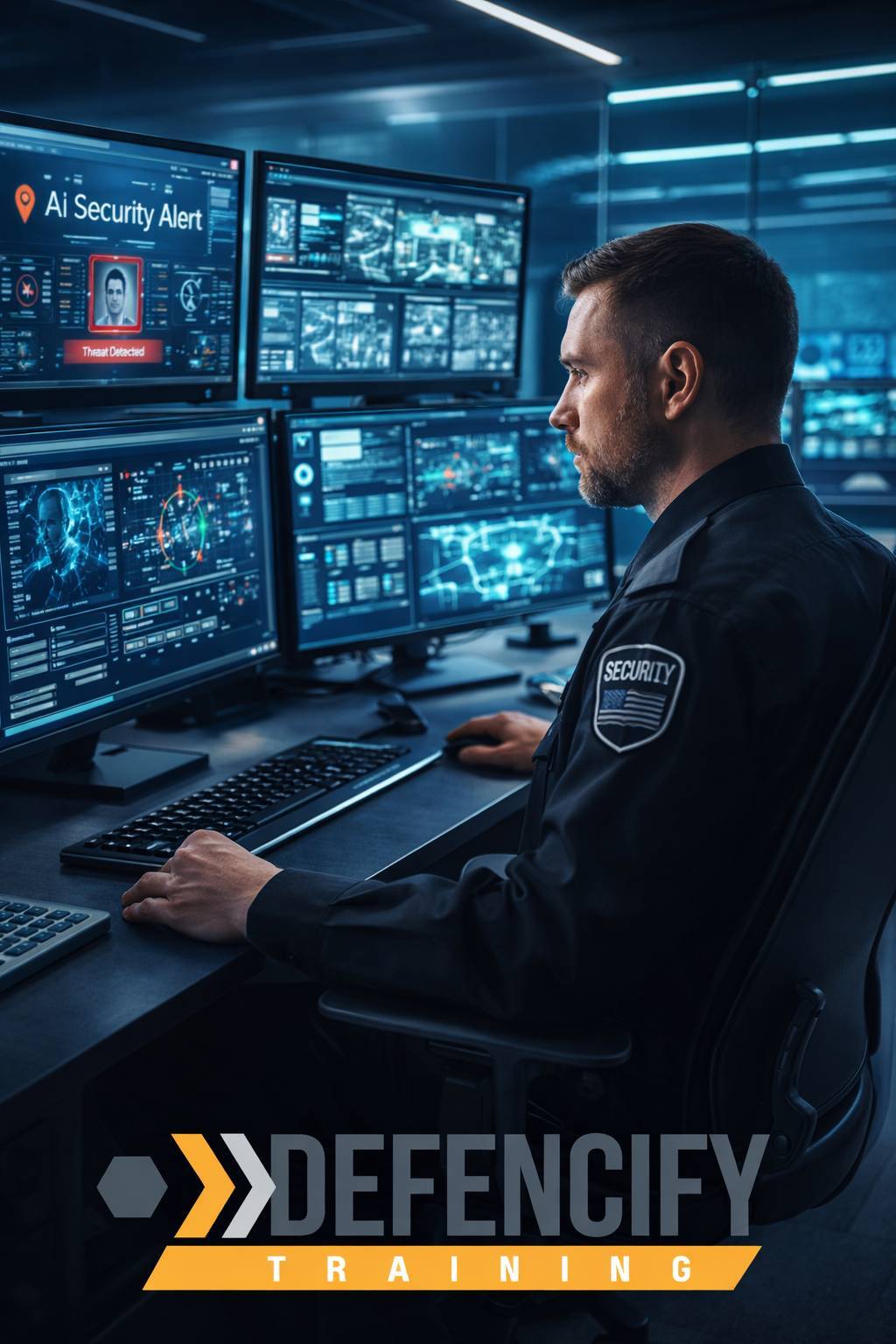
Security work is getting smarter by the second. Technology is more prevalent than ever in modern security, with AI-enabled cameras, sensors, and remote monitoring among the supports.
Suffice it to say, guard work today bears little resemblance to that of years past. Clients want guards who are comfortable with their new tech, and firms prioritize tech-savvy guards, but many are simply thrown into situations without proper training.
Like most technology, it’s fairly easy to learn the broad strokes. For advanced tools like these to be used to their fullest advantage, targeted training is essential; it would be substantially easier if systems were standardized.
As technology adoption transforms day-to-day guard responsibilities, training remains the missing link between advanced tools and their effectiveness.
From Physical to Tech-Enabled Security: How Tech is Changing Your Post
Today, guards increasingly work alongside AI-enabled systems. Whereas in the past, guards were primarily responsible for monitoring environments, they are now also tasked with interpreting alerts from the systems they use.
In hybrid security roles, it’s critical to note that technology is a support, not a replacement for a physical guard presence. Machines lack empathy, reasoning, and subtlety, which are often required for decision-making.
For example, some AI systems are designed to interpret human behavior, while others detect weapons. And while these features may seem helpful, they’re not always accurate. Some behaviors are easily explained, and the error margin of weapons-detection AI is too high to rely on completely. In all cases, human judgment is needed to prevent unnecessary disruption.
In other words, it’s not perfect—and neither are humans. But together, they are a force to be reckoned with.
Clients and firms are shifting to hybrid physical-digital security for many reasons, not the least of which is that it increases security without requiring additional personnel. One well-equipped command center can cover an entire building or property, providing eyes everywhere and optimizing a guard’s time.
Technology excels for access control. Using biometric data, digital systems can prevent unauthorized access without requiring a physical guard presence.
There are many benefits, but ultimately, the result is a leaner, better-informed security force with multiple layers of security.
Guards who are comfortable with a hybrid environment are prioritized for these positions and may also be eligible for higher pay and better posts.
New Skills Modern Training Must Address
As security technology evolves, most training is on-the-job. Firms may provide training or tutorials on tech they use or endorse, but that doesn’t cover every scenario.
In developing a viable training program, three core competencies must be addressed:
·
Tech literacy. At a very basic level, guards today must be comfortable with using technology. Whether it’s in the command center or simply using communication or reporting apps, most guard functions are digitized, so basic computer and mobile device skills are essential. Guards will need to understand security dashboards, alerts, and basic system functions as they pertain to their responsibilities.
·
AI threat identification. AI-enabled systems are becoming more common in some environments. Examples include hospitals, corporate headquarters, sporting or entertainment events, and public places. As mentioned above, these systems are far from perfect, so guards must know not only what the AI will flag but also know that they need to apply sound judgment to prevent undue harm.
·
Remote incident support integration. Guard-facing technology provides the data, the guard interprets the findings, and must then liaise with the appropriate stakeholders. In some cases, this may involve coordinating with command centers or remote monitoring teams; in others, it may require immediate escalation to law enforcement. In any case, understanding the escalation matrix is essential to ensure the proper procedure is followed.
These are just some of the skills modern guards will need, but as systems become more advanced, so must their training.
Why Training Must Evolve with Technology
We’ve all witnessed how quickly technology advances. What was cutting-edge just a few years ago is outdated today. We can think of tech training the same way. Misuse or misunderstanding of technology increases risk not only for the public but also for the guard, who may be unable to perform their job effectively.
Similarly, overreliance on automated tools and AI without adequate training creates blind spots that increase liability.
Well-trained guards accelerate and amplify the value of smart security tools. A guard’s knowledge and experience become a superpower with the right technological support. But doing so without training is like wielding a weapon without first understanding the technique. Given the sophistication of today’s threat environment, an ill-equipped guard would be at a disadvantage if they did not have agency over the tools at their disposal.
The Security Workforce Evolution: The Future is Here and Now
Just as technology has influenced almost every other industry, it is also transforming career paths and security specialization.
Guards who are tech-savvy and learn quickly are in high demand, not just from clients but also from security firms.
Tech training has the potential to become a significant differentiator for securing higher-skill, high-trust roles, not to mention more interesting posts, command center positions, and security leadership.
The security industry is at a tipping point, where we must reconsider what “qualified” means in modern security. To ensure we are aligned with the times, training should include modules on security technology, updated as needed to capture trends such as robotic surveillance, AI-enabled detection, and command center operations.
Tech training takes core skills to the next level and future-proofs the job. Firms that can provide tech-savvy guards ready to jump right in will be preferred providers, helping secure not only property and people but also the bottom line.
Technology Doesn’t Replace Guards: It Changes the Skill Set.
In the digital world, people are still the catalysts for excellence. Machines and automation may simplify, but human judgment remains essential.
To ensure your firm is on the right side of future trends, dedicated tech training must be established that blends technology awareness with core security skills.
A future-forward guard is both situationally aware and tech-fluent, bringing core skills and best practices to the table. At the same time, technology fills the blind spots that have historically been a barrier.
As the threat environment escalates, so must our protection and prevention methods. Tech and well-trained guards are an unbeatable combination and every firm’s assurance of meeting the future on even ground.
Browse our online courses today.