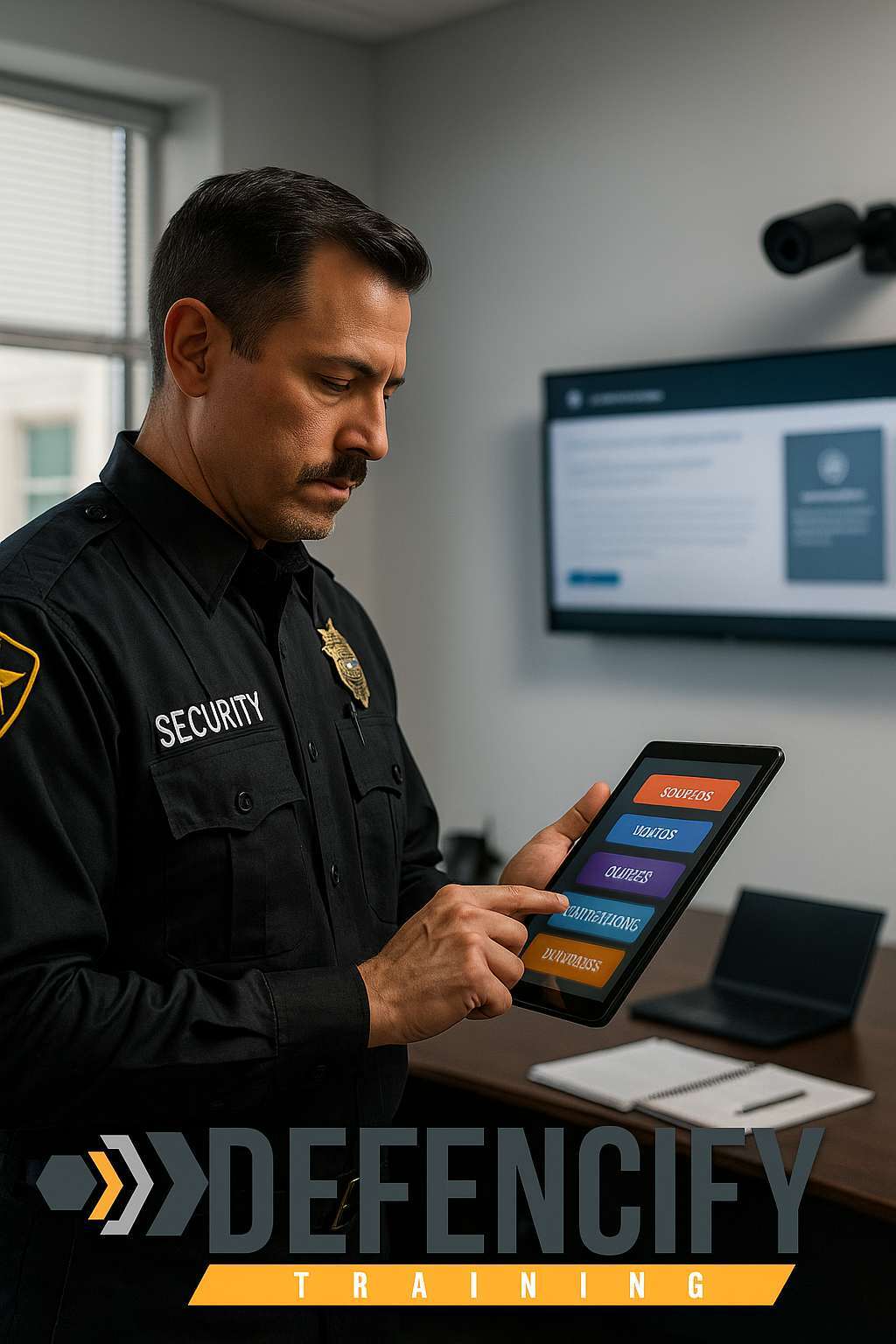
Training is essential to success as a security guard. Guards face challenging situations and people every day. Without the confidence that training brings, there is risk of injury and loss, not just for the guard, but also for the firm, the client, and the public.
If you are considering a career as a security guard or wondering what it takes to rise to the top of this in-demand field, we’ve compiled a list of foundational skills every guard should master.
The Core Competencies Every Security Guard Should Master
As technology and client expectations evolve, so does a security guard’s role. It’s no longer just about patrolling an area or standing watch. Today’s guards must have solid people skills, in addition to technical proficiency, strong communication, problem-solving, and an understanding of liability and the law.
While this is not an exhaustive list of competencies, it provides a high-level view of what employers and clients value in a new hire.
Understanding Use of Force Continuum
The use of force continuum is a term used to describe the escalation of the use of force. The goal is to use the minimum force required. The continuum is a framework for escalating or de-escalating a situation based on specific variables.
Here’s a basic outline of the continuum. The guard only escalates to the next stage when their efforts are ineffective.
1.
Presence. A guard’s presence is often enough of a deterrent.
2.
Verbalization. Verbal assertions, warnings, or commands are intended to de-escalate situations without the need for physical intervention.
3.
Empty-handed control refers to physical interventions such as escorting people off the property, restraint holds, or joint holds.
4.
Non-lethal force may involve tools like batons, pepper spray, or tasers to control a perpetrator.
5.
Lethal force is used when the guard faces a serious or imminent threat to their own life or to others. This stage is highly regulated and may involve firearms, which require licensing and extensive training. If challenged legally, the guard will need to prove significant escalation.
It goes without saying (or it should) that a solid understanding of the law is essential. You need to not only know your rights and responsibilities, but you must also be well-versed in local, state, and federal laws as they pertain to your job and human rights in general.
Building Situational Awareness: Training Your Mind to Notice the Details
Great security guards are keen observers. They can often recognize trouble before it starts and take steps to de-escalate the situation before it gets out of hand.
Developing situational awareness requires training and experience and becomes more acute over time. A large part of this is knowing the difference between expected and unusual behavior in certain environments, as it enables the guard to respond appropriately.
Observational skills also come into play when there is a need to describe a suspect, the surroundings, a vehicle, or other critical details as they will need to be included in the incident or shift report and perhaps relayed to the police or other first responders. The better your observational skills, the more detailed you can be, and this knowledge could mean the difference between resolving the situation and not.
These days, situational awareness is more important than ever. Unusual behaviors can signal an imminent threat, and if that’s the case, time is of the essence. But it’s not just about scanning the immediate area; guards must also be well-versed with surveillance technology so that it becomes an extension of themselves, like an extra set of eyes.
Tech Literacy
Security technology is escalating rapidly, as are its value and sophistication. Today’s guards must be well-versed in tools such as video surveillance, bodycams, communications technology, command centers, AI-driven detection tools, emergency response tech, electronic access control, biometrics, and even robots and drones.
As more clients invest in advanced security tools, the demand for tech-literate guards will also increase. Guards with these competencies will rise to the top. Mastery of key tools may also mean higher pay, more responsibility, and more interesting and diverse career paths than would otherwise be open to you.
Since security tech is still evolving, there is no standardization. However, every bit of experience or training you can access will be advantageous. Security guards who are comfortable with technology will be preferred candidates.
Keep in mind that technology is meant to enhance the job, not replace what guards do. Guards bring context and empathy to human situations, which a machine cannot. The ultimate vision is for machines and guards to work together, each providing an essential piece of the security puzzle.
Why Communication Skills Matter More Than Muscle in Security Work
In a perfect world, most conflicts can be resolved through communication rather than escalating to violence. Of course, we don’t always get what we want, but the better your communication skills are, the more likely you are to de-escalate a situation before it spirals.
A skilled communicator can:
·
Proactively prevent incidents from happening.
·
Diffuse tension with a calm, empathetic, professional tone and demeanor.
·
Build trust by showing empathy, actively listening, and demonstrating understanding rather than being dismissive, overbearing, or impatient. When people feel they can trust a guard, they are more likely to comply with security procedures, evacuations, and other directives.
·
Communicate effectively with the public, law enforcement, and other stakeholders to maintain order, prevent injury, and ensure first responders have the information they need to do their jobs.
·
Report and document incidents accurately, a crucial skill for compliance as well as for any legal proceeding or investigation, and for improving security procedures and methodologies.
·
Be a better team member, providing seamless communication to ensure roles are clear and that everyone is on the same page. In high-stakes situations, this skill could mean all the difference in the outcome.
Communication is considered a soft skill, but specialized training is available. From basic communication skills to documentation and report writing and advanced Human Response Training these skills will help you gain public trust and maintain order in even the most challenging situations.
The Most Important Skill of All: a Willingness to Learn
Guard training is never one-and-done. Trends, technology, and client expectations change rapidly, and career-minded guards must be ready and willing to learn. Most guard certifications require continuing education to maintain licensed status, but there are so many interesting and emerging topics to master.
If you’re motivated to learn, the sky’s the limit. Browse Defencify’s on-demand courses and step into your future.