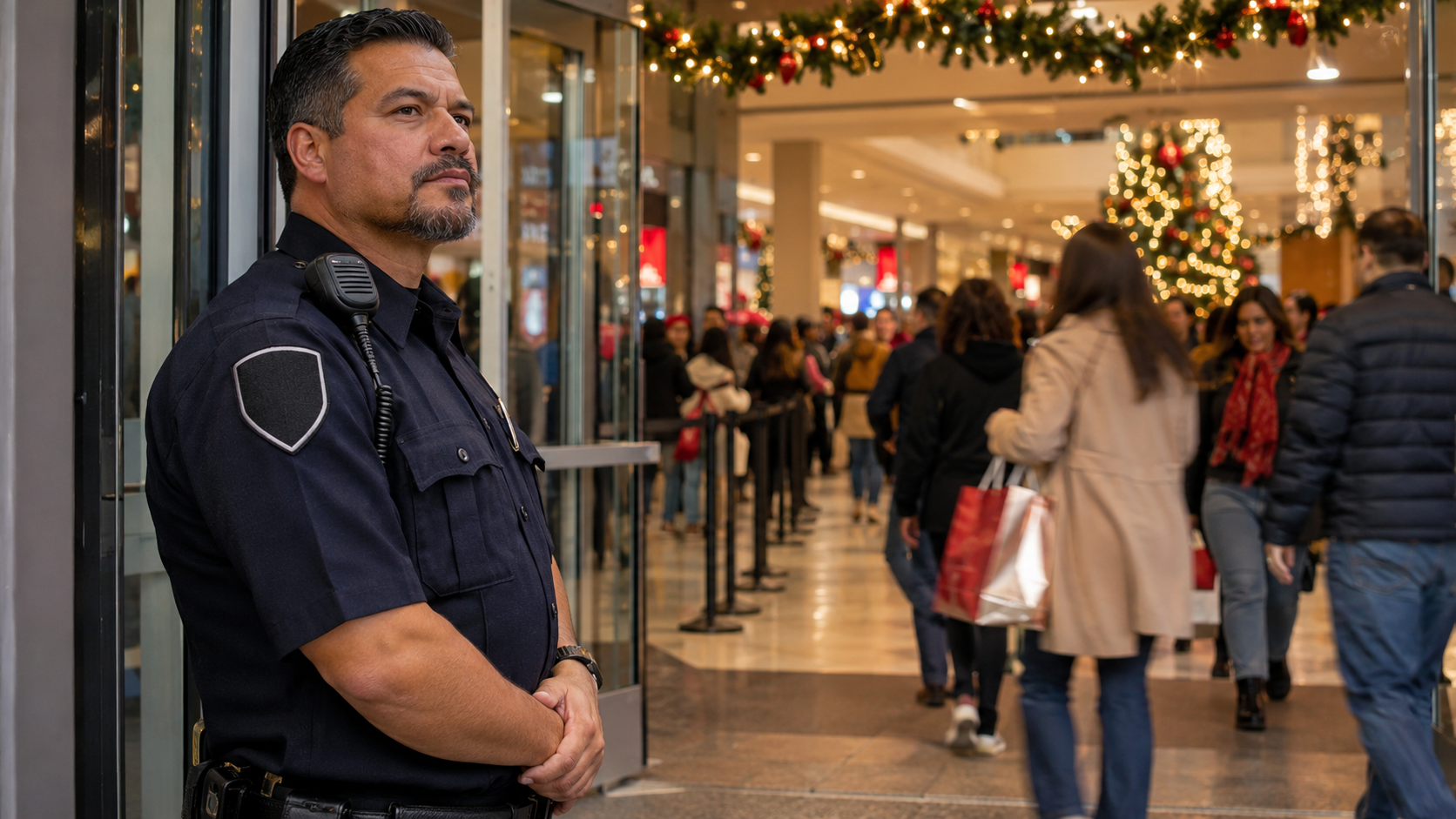
The holiday season puts new hires and reassigned guards on posts they have never worked, at the busiest time of year. A guard may get a call the afternoon before a shift and walk onto a mall entrance, a big-box store, or a tree lighting the next morning.
Post orders are already in place. But a guard pulled onto a shift with a day's notice may never read them closely, and a PDF buried in an email doesn't help someone standing at a door while a line builds.
A short pre-shift refresher closes that gap. Below, we cover what it should include, how to run it, and why documenting it matters.
Why Seasonal Posts Break Down
Four problems tend to come up on seasonal posts.
- Unfamiliar layouts. A guard who doesn't know the entrances, exits, and stairwells can't direct a crowd or respond to an emergency efficiently. Even experienced guards lose time on a post they have never walked.
- Crowd density far above a normal day. Peak shopping weekends, the day after Christmas, and New Year's Eve events put far more people in a space than a normal day brings, even for guards who know the post well.
- New client contacts. Retailers and venues hire seasonal staff too, so the store or venue contact your guard is told to find may have started last week.
- Pressure to act on theft. A guard who doesn't know the client's policy is likely to hesitate or to do too much. Neither helps the guard, the client, or the firm.
What should the pre-shift refresher cover?
Keep the refresher focused on the parts of the post orders that matter most on a busy shift, and tell the guard what to do first.
Crowd flow. Walk guards through the entrances, exits, and choke points on the post. Note the places that crowd up, like queue lines, door openings, and checkout stations. Point out the emergency exits that must stay clear, make sure displays aren't blocking them, and tell guards who to notify when the crowd gets too dense to be safe.
Theft response. Guards need to know whether the client's policy is observe and report only, or something more. A guard should know exactly what they are and aren't authorized to do. Detention authority varies by state and by contract, so work from your own policy and the client agreement.
One rule is worth stating in every version: don't pursue a suspect off the property. Then tell guards what to capture for the report: a description, direction of travel, items taken, and the time.
When to call the police. Violence, threats of violence, and visible weapons are clear triggers to call law enforcement. So is a suspect who turns aggressive, a crowd surge, or a crush risk, and the guard should know who on site makes the call and when to use 911 versus a non-emergency line. Any confusion here costs time, and on a crowded post there isn't much to spare.
Post basics. Radio channels, how to reach the supervisor and the client contact, and how and where to file an incident report.
How to Run a Pre-Shift
Keep it short. Hold it at the start of the shift, on the post itself whenever you can. Standing next to a choke point makes it easier to remember than seeing it on a diagram.
Then check that it landed. Ask questions and have guards answer them: "Where is the nearest emergency exit?" "Who do you call if the line at the door stops moving?" "What goes on your report after a theft?" Their answers tell you right away whether the information stuck.
Finally, record who completed the pre-shift in your own reports.
What Changes on Event Posts?
Holiday concerts, tree lightings, and New Year's Eve events add bag checks, ticket gates, intoxicated guests, and crowds that all leave at the same time. Crowd exit is a common risk point on event posts, and a guard who has only worked retail posts may never have managed one. Add those items to the refresher for event posts.
Defencify's Crowd Management Essentials covers this in more depth and is a good fit ahead of the holidays. Each learner receives a completion certificate, which helps the guard and the firm when a client audit or a liability review comes up after an incident. A briefing with no record behind it is difficult to prove later.
Turning Post Orders into Repeatable Guard Training
Your firm likely has post orders for each engagement. The more difficult part is getting them in front of every guard in a form that sticks.
Defencify helps guard firms turn their post orders into training that guards can repeat before each seasonal shift, with completion tracked in one place.
With PostReady, you send us the post orders you've already written, and our learning development team builds an interactive course around them, with quizzes and a final exam. Completion certificates are issued automatically.
See how it works for your team at Defencify for Business.